

What Is Pixel Pitch?
Pixel pitch measures the distance in millimeters between the centers of two adjacent LED pixels. A 2mm pixel pitch means each pixel sits 2mm from its neighbor. This seemingly simple measurement has profound implications for image quality, viewing distance, and cost.
Smaller pixel pitches pack more pixels into the same space, creating higher resolution and sharper images. A 1.2mm display delivers significantly greater detail than a 4mm display of the same size, but at a substantially higher price point.
Why Pixel Pitch Matters

Pixel pitch directly influences three critical factors:
Visual clarity: Fine-pitch displays (0.7mm to 2.9mm) produce smooth, detailed images suitable for close viewing. Standard-pitch displays (3mm and above) work well for distant viewing but appear pixelated up close.
Viewing distance: Smaller pitches allow viewers to stand closer without seeing individual pixels. The relationship is straightforward: as pixel pitch decreases, acceptable viewing distance decreases proportionally.
Cost: Higher pixel density means more LEDs per square foot, dramatically increasing material and production costs. Specifying a finer pitch than necessary wastes budget without improving the viewer experience.
The Viewing Distance Formula
Industry professionals use the Visual Acuity Distance (VAD) to calculate the minimum distance a person with 20/20 vision must stand from a display to see a coherent, non-pixelated image. The formula is:
VAD (in feet) = Pixel Pitch (mm) × 3438 ÷ 1000 ÷ 3.281
A simpler approximation, called the 10x Rule, estimates viewing distance by multiplying pixel pitch by 10. For a 2mm display, this suggests roughly 20 feet as the minimum viewing distance.
For practical planning, designers often use Average Comfortable Viewing Distance (ACVD), which accounts for real-world factors like content type and individual eyesight. This typically equals the pixel pitch multiplied by 30.
Matching Pixel Pitch to Your Space
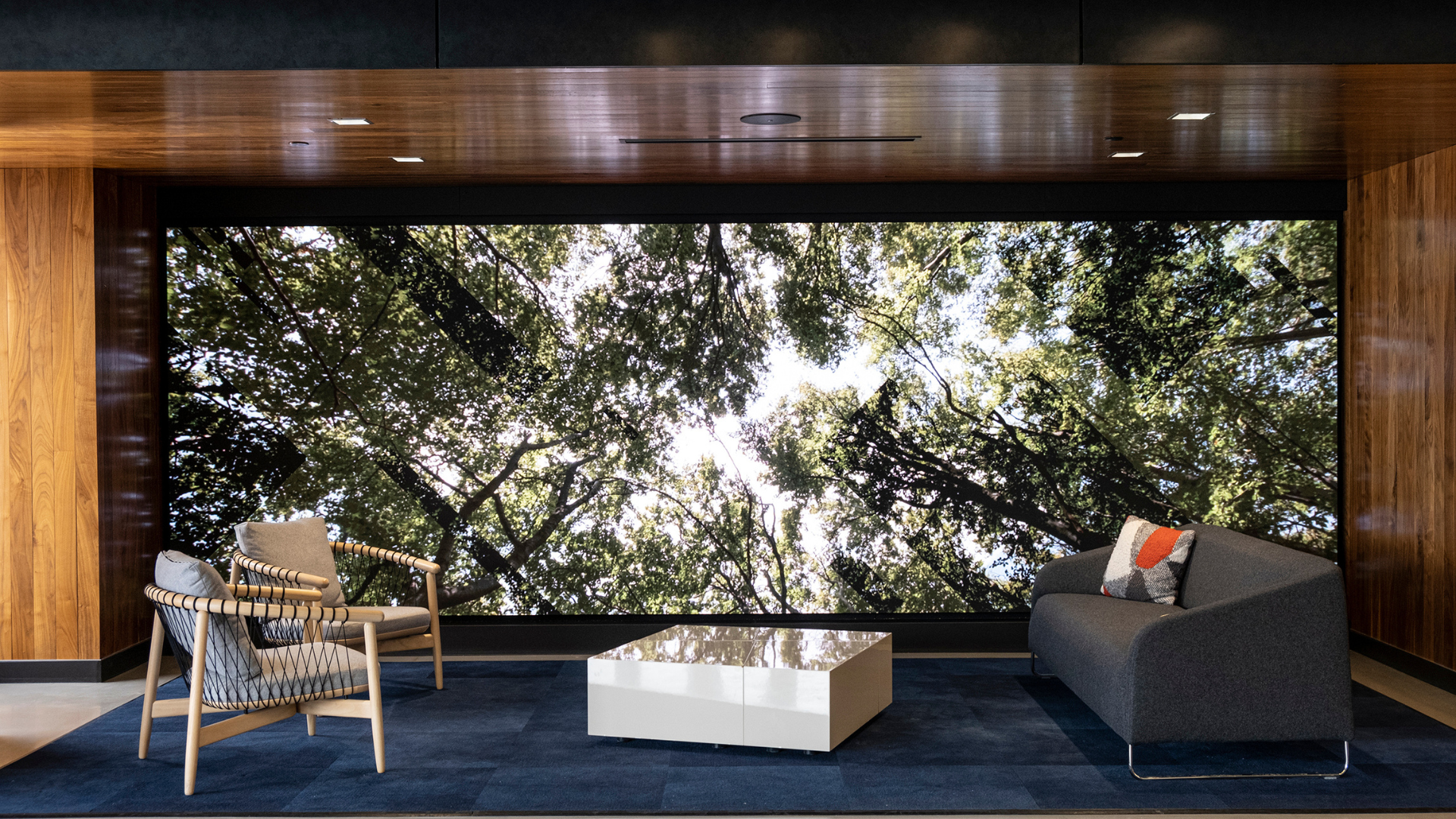
Small lobbies and reception areas (viewing distance 4-8 feet): Choose 0.7mm to 1.5mm pitch. Viewers stand close, often within arm's reach when interactive. Ultra-fine pitch prevents visible pixelation and supports detailed content like wayfinding graphics or high-resolution imagery.
Conference rooms and boardrooms (viewing distance 8-15 feet): Specify 1.5mm to 2.5mm pitch. This range delivers crisp presentations and video conferencing without excessive cost. Executives can read detailed financial data or spreadsheets clearly from the conference table.
Auditoriums and large meeting spaces (viewing distance 15-40 feet): Select 2.5mm to 4mm pitch. Audiences view from theater-style seating, making ultra-fine pitch unnecessary. This sweet spot balances image quality with budget considerations for spaces like lecture halls or worship centers.
Arenas, stadiums, and outdoor venues (viewing distance 40+ feet): Use 4mm to 10mm pitch or higher. Spectators view from bleachers or stands far from the display. Coarser pitch handles the viewing distance perfectly while dramatically reducing costs for large-scale installations.
Beyond Distance: Consider Content and Use
Content type influences pitch selection beyond pure viewing distance. Interactive displays benefit from finer pitch since users approach closely. Conversely, displays showing primarily video or simple graphics can utilize coarser pitch even in smaller spaces.
Ambient lighting matters too. Higher-pitch outdoor displays combat bright sunlight with increased brightness capabilities, while fine-pitch indoor displays optimize for controlled lighting conditions.
A Decision Framework
Follow this process to select the optimal pixel pitch:
- Measure your space and identify the typical viewing distance from the display to viewer positions
- Calculate the VAD or ACVD using the formulas above to determine acceptable pixel pitch ranges
- Evaluate content requirements—detailed spreadsheets demand finer pitch than simple signage
- Consider interactivity—touchscreen applications require fine pitch for close proximity
- Balance quality and budget—specify the coarsest pitch that meets viewing requirements
The Bottom Line
The best pixel pitch isn't the finest available—it's the one that matches your environment's viewing distance and content needs. A stadium doesn't need 1mm pitch any more than a reception desk needs 8mm pitch. By understanding the relationship between pixel pitch, viewing distance, and application requirements, you'll specify LED video walls that deliver exceptional visual experiences without wasting resources on unnecessary resolution.

.png)
