

Key Takeaways
- Prefabricated mounting systems eliminate room-by-room custom shop drawings for standard room types
- Off-site pre-build and QA catches problems before they reach the job site
- Install time drops significantly when technicians hang and connect to defined reference points instead of fabricating in the field
- Job site waste decreases because cutting, drilling, and fitting happen in a controlled shop environment
- Service time improves because standardized front-access designs mean one technician can handle maintenance without a lift
- GCs and facilities teams benefit from predictable penetrations, clean edges, and shorter on-site windows
1. The Problem with Custom Fabrication in Every Room
When each conference room gets a unique mounting solution, every room requires:
- Custom shop drawings and approval cycles
- Field measurements after finishes are complete
- On-site cutting, drilling, and cable routing
- Multiple trade passes (mount, cable, device, test)
- Unique service procedures for each configuration
Multiply that by 15 or 40 rooms and the schedule impact is real. Trades stack. Rooms that should have been done on Tuesday are blocking the next crew on Thursday. RFIs pile up because clearances, ventilation paths, and cable routing differ in every room.
2. What Prefabrication Changes in Design
A prefabricated mounting system standardizes the geometry. For like-for-like rooms, you don't redraw. You select a model, confirm the display size, and move to procurement.
With our Clam System 3.0, design changes look like this:
- No custom shop drawings for standard room types
- Standardized clearance, ventilation, and cable paths that eliminate 80% of RFIs
- Pre-defined penetration locations the GC can rough-in from a single reference sheet
That means faster approvals, fewer coordination meetings, and less back-and-forth between trades.
3. What Prefabrication Changes in Installation
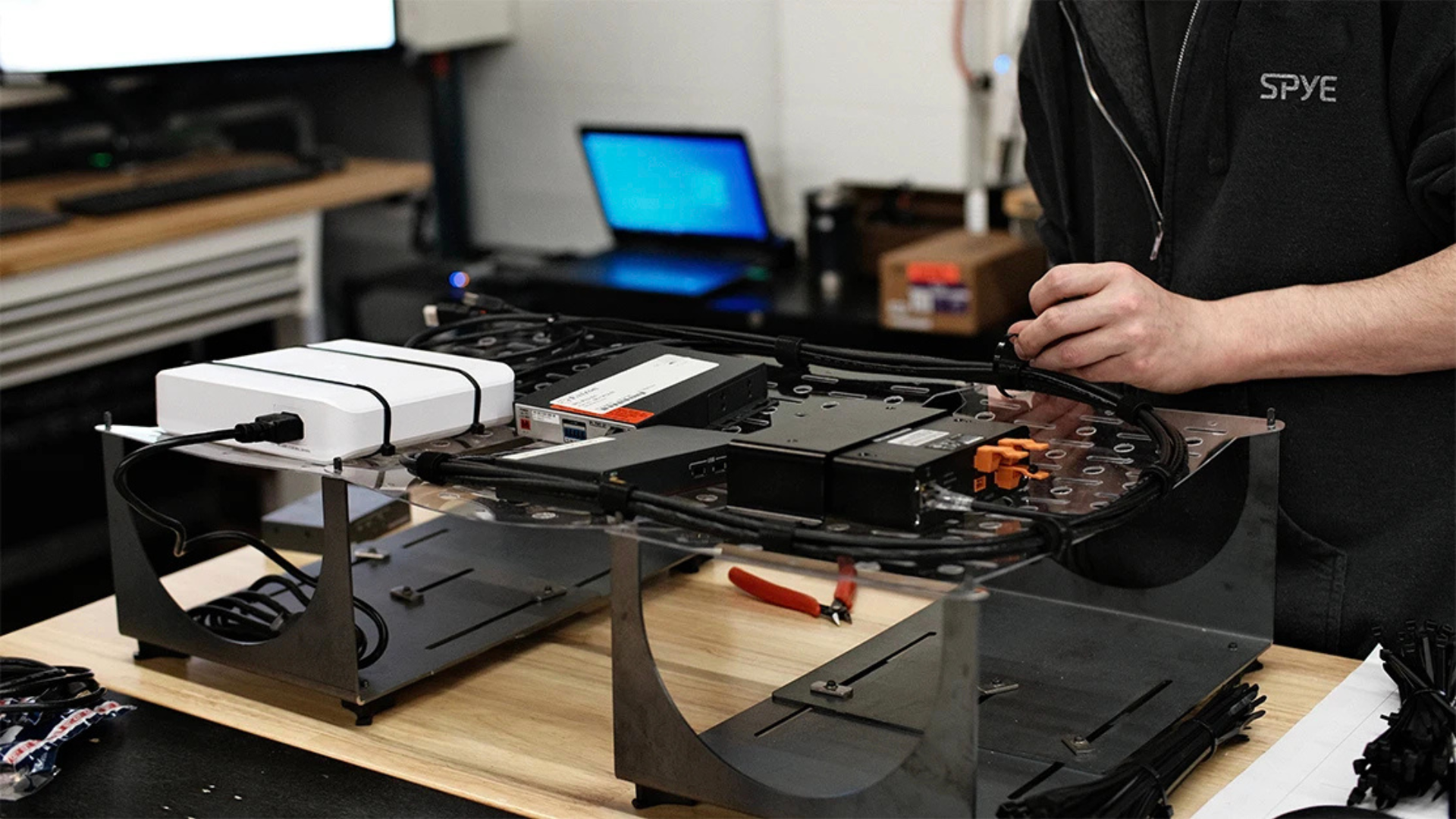
The Clam System ships to the job site fully assembled, tested, and QA'd. Devices are pre-mounted. Drivers are updated. Components are verified.
On site, the install process is:
- Hang the chassis on pre-placed mounting points
- Level using built-in reference points with strain relief and gap control
- Connect pre-routed cables
- Mount the display onto the pre-assembled pan mount
The result: 75% faster installation with zero failures on initial power-up. And 80% of the waste that would have been generated on site stays in our shop, where it's recycled properly. A recent 15-room install at Jamf produced 178 lbs of total waste, all handled off-site.
4. What Prefabrication Changes in Service
This is where the long-term value shows up. A conventionally mounted display requires:
- A second technician or a lift to access components behind the screen
- Partial disassembly of the mount to reach connections
- Re-leveling the display after any service event
The Clam System opens to a 15-degree service state from the front. One technician. No lift. No demounting. No re-leveling. That saves 60-90 minutes per service event and cuts service labor by 50%.
For facilities teams managing dozens of rooms, that difference compounds every quarter.
5. No Credenza, No Rack, No Wasted Space
A full boardroom of AV components can be installed behind the display using the Clam System. No credenza. No floor rack. No extra enclosure.
This matters for:
- Room layout flexibility. Without a credenza eating 3-4 feet of wall space, tables can be repositioned and rooms can be reconfigured.
- Fewer cable runs. Components mount directly behind the display, shortening signal and power paths.
- Cleaner aesthetics. Architects and designers get the clean wall they wanted without compromising AV functionality.
6. Why GCs and Facilities Teams Ask for It
The feedback from general contractors and facilities partners is consistent:
- Clean edges without custom trim
- Predictable penetrations they can rough-in early
- Less dust and debris during AV install
- Shorter maintenance windows that don't disrupt occupied floors
- Standardized spares that simplify the service playbook
Once a building deploys the Clam System on one floor, replicating across additional floors or sites follows the same five-step process: room survey, model selection, off-site pre-build and QA, single-visit install, and service diagram handover.
FAQs
Does prefabricated mounting work for all room types?
It covers the most common configurations: huddle rooms, medium spaces, large conference rooms, and boardrooms. Specialty rooms with unique requirements may still need custom solutions, but standardizing the standard rooms frees up time and budget for those exceptions.
What if our display sizes vary across rooms?
The Clam System accommodates common display sizes and is compatible with all typical AV devices up to 1.75 inches thick. The chassis standardizes the mounting geometry regardless of specific display model.
How much waste does prefabrication actually reduce?
In a recent 15-room install, total job site waste was 178 lbs, all recycled off-site. That's an 80% reduction compared to conventional field fabrication for the same scope.

.png)
