

1. Where AV Installation Waste Actually Comes From
Most people picture AV installation as hanging a display and plugging in a few cables. The reality on a commercial project involves far more material. Each room typically requires mounting hardware, conduit, cable bundles, power distribution components, rack or credenza materials, and the packaging for every individual piece.
When each room is built from scratch on-site, the field team cuts conduit to length, trims cable runs, and fabricates custom mounting solutions. Every cut creates scrap. Every custom solution generates leftover hardware that doesn't get used on the next room because the next room is different.
On a traditional multi-room project, the waste stream includes cut metal from brackets and conduit, cable jacket trimmings, cardboard and foam packaging, unused mounting hardware, and drywall dust from unplanned penetrations.
2. How Prefabrication Shifts Waste Off-Site
The core principle behind prefabricated AV mounting is simple: do the building and cutting in a controlled shop environment, not on the job site. When systems are assembled, tested, and packaged at our facility before they ever reach the building, the waste stays where it can be managed properly.
In a shop environment, scrap metal goes into designated bins for recycling. Cable offcuts are sorted by type. Packaging materials are consolidated and processed in bulk rather than tossed into a mixed-waste dumpster on a construction site.
Construction job sites rarely have the infrastructure for effective waste sorting. Dumpsters are shared across trades, and anything that goes in gets hauled to the same place. A shop environment allows for the kind of material separation that actually makes recycling viable.
3. Standardization Eliminates Over-Ordering
One of the less obvious sources of waste is over-ordering. When every room requires a custom mounting solution, estimators add buffer to material quantities because field conditions are unpredictable. That buffer turns into surplus hardware, extra conduit lengths, and spare brackets that never get installed.
With a standardized mounting platform, the bill of materials for each room type is known and repeatable. A huddle room uses one configuration. A medium conference room uses another. The quantities are precise because the design has been validated across dozens of installations.
On a 20-room project, even small per-room surpluses in brackets, cable, and hardware add up to significant excess material that was purchased, shipped, and ultimately discarded.
4. Cleaner Job Sites and Fewer Trade Conflicts
AV integrators rarely have a job site to themselves. They share space with electricians, data contractors, painters, and furniture installers. When AV installation generates visible waste and clutter, it creates friction.
A field-fabricated AV install means tools, scrap, and staging materials spread across the floor for days. Prefabricated systems arrive ready to mount. The installation footprint shrinks dramatically, and the cleanup afterward is minimal.
General contractors and facilities teams notice this. Clean edges, predictable penetrations, and less dust make prefabricated installations easier to schedule around other trades.
5. Eliminating Credenzas Reduces Material Volume
Traditional AV installations often include a credenza or equipment rack in each room to house AV components. That's a piece of furniture that requires its own packaging, delivery, and installation labor.
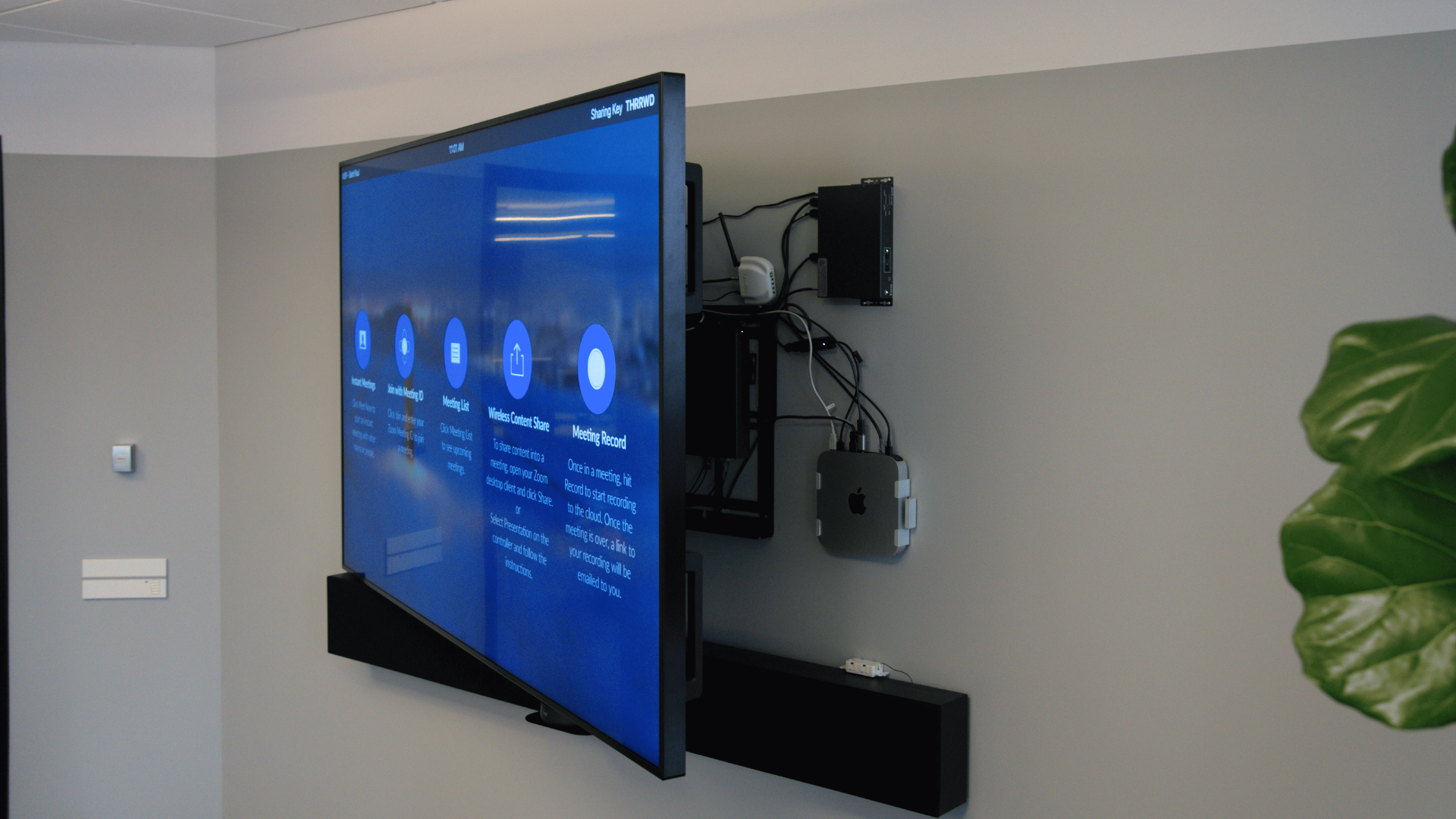
When AV components mount directly behind the display on a prefabricated chassis, the credenza disappears entirely. No furniture packaging, no assembly waste, and no disposal of damaged or misfit pieces. On a full floor build-out, that's a meaningful reduction in total material volume.
For more on how this changes room layouts, see our blog on The Mounting Hardware Mistake That Costs You Twice.
6. Fewer RFIs Mean Fewer Material Changes Mid-Project
Requests for information during construction often lead to material changes. A mounting location shifts, a cable path gets rerouted, a display size changes. Each change generates waste from materials already purchased that no longer fit the revised plan.
Standardized mounting systems with pre-validated clearance, ventilation, and cable path layouts dramatically reduce these mid-project changes. Fewer design clarifications means fewer material pivots and less scrap from abandoned solutions.
This connects to the design-phase work we discuss in Planning AV for a Building That Doesn't Exist Yet. The earlier the AV approach is defined, the less likely it is to generate waste from rework.
7. The Long-Term Service Waste Equation
Waste reduction doesn't end at installation. Every time a technician services a room, there's potential for additional material use. If servicing requires removing finishes, re-leveling displays, or pulling new cable because the old path isn't accessible, those events generate their own waste stream over years of operation.
Front-access service designs change this. When a technician can swap a component without disturbing the wall, ceiling, or display alignment, the service event produces almost zero waste. Over a 7 to 10 year system lifecycle, the cumulative reduction from cleaner service events adds up, especially across a portfolio of many rooms.
For a closer look at what reliable service looks like, read What High-Reliability AV Support Really Means.
FAQs
How much waste does a typical AV installation generate per room?
It varies widely depending on the approach. A field-fabricated room with custom mounting, conduit runs, and a credenza can generate a surprising volume of mixed scrap. Prefabricated approaches reduce that significantly by moving cutting and assembly off-site.
Can AV installation waste be recycled?
Much of it can, including scrap metal, copper wire, and certain plastics. The challenge is that job site dumpsters mix everything together. Off-site prefabrication allows proper sorting because the waste is generated in a controlled environment.
Does prefabrication cost more than traditional installation?
The total project cost often comes out lower because prefabrication reduces labor hours, material waste, and rework. The per-unit cost of a standardized mounting system is predictable, which also helps with budgeting accuracy.
Does this apply to renovations or only new construction?
Both. Renovations often generate more waste because of demolition of existing systems. A prefabricated replacement system minimizes the new material waste added during the upgrade.

.png)
